


.png)
Acacia Honey
Acacia, often sourced from the flowering black locust tree (Robinia pseudoacacia), is widely cultivated across Europe and prized for its abundant, early-season blossom. For beekeepers, acacia stands offer a generous and dependable nectar flow just as colonies are gathering strength in late spring. The honey produced from acacia is exceptionally light—almost water-clear in colour—with a delicate floral aroma and a clean, mild sweetness that makes it one of the most universally appealing monofloral honeys. Notably slow to crystallise due to its high fructose content, it retains a smooth, liquid texture for long periods. Highly valued for its purity, clarity, and subtle flavour, acacia honey remains a favourite among both beekeepers and consumers worldwide.
Borage Honey
Borage is widely grown in the UK both for its valuable seed oil and as a late-season cover crop. For beekeepers, it is an ideal forage plant, producing abundant nectar just when many other sources are fading. The resulting honey is renowned for its delicate character, with a beautifully light colour and a clean, subtle flavour. Because of its strong nectar flow and pollination value, borage has become a favoured crop for many UK bee farmers, who often move their colonies to borage fields during its flowering period.


Sunflower Honey
Sunflowers are cultivated across the UK and much of Europe for their valuable oilseeds. For beekeepers, sunflower fields offer a reliable mid- to late-season nectar flow, providing abundant forage when other floral sources may be in decline. The honey produced from sunflower blossom is typically golden yellow in colour, with a bright, sunny aroma and a flavour that is mildly floral, slightly fruity, and pleasantly dry on the finish. It tends to crystallise with a fine grain, producing a smooth, buttery texture. Thanks to its strong nectar yield and pollination benefits, sunflower honey has become a seasonal favourite among bee farmers and honey enthusiasts alike.
Blueberry Honey
Borage is widely grown in the UK both for its valuable seed oil and as a late-season cover crop. For beekeepers, it is an ideal forage plant, producing abundant nectar just when many other sources are fading. The resulting honey is renowned for its delicate character, with a beautifully light colour and a clean, subtle flavour. Because of its strong nectar flow and pollination value, borage has become a favoured crop for many UK bee farmers, who often move their colonies to borage fields during its flowering period.
.png)
.png)
Thyme Honey
Thyme, native to the Mediterranean and widely grown across southern Europe, flowers during the heat of early to mid-summer, carpeting dry hillsides and coastal landscapes with tiny, nectar-rich blooms. For beekeepers, thyme provides an exceptional and highly aromatic nectar flow, often in challenging but unspoiled terrain. The honey produced from thyme blossom is typically amber in colour, with an intense herbal aroma and a complex flavour that balances floral sweetness with savoury, spicy, and slightly peppery notes. It has a smooth, full-bodied mouthfeel and a lingering, warming finish. Revered for both its flavour and natural character, thyme honey is considered one of the great classic monofloral honeys, prized by beekeepers and honey lovers alike for its depth and intensity.
Dandelion Honey
Dandelions are among the earliest and most widespread spring flowers in the UK, carpeting fields, verges, and meadows with their bright yellow blooms. For beekeepers, they provide an invaluable early-season nectar and pollen source, supporting colony build-up after winter when forage can still be scarce. The honey produced from dandelion is striking—vivid yellow to deep golden in colour, with a bold, grassy aroma and a flavour that is intensely floral, slightly tangy, and often described as reminiscent of chamomile or hay. It crystallises quickly, developing a firm, fine-grained texture. Though relatively uncommon as a pure varietal due to the fleeting nature of its flow, dandelion honey is cherished for its bright, distinctive character and its essential role in sustaining early spring colonies.
.png)
.png)
Lavender Honey
Lavender, grown across the Mediterranean and in parts of southern England, produces abundant nectar from its fragrant purple flower spikes during the height of summer. For beekeepers, lavender fields offer a reliable and deeply aromatic forage source, drawing bees in great numbers throughout the blooming season. The honey produced from lavender is typically light amber to pale gold, with a beautifully perfumed aroma and a smooth, floral flavour that carries subtle herbal and slightly sweet notes. It crystallises slowly, forming a fine-grained, creamy texture that enhances its delicacy. Highly prized for its elegance and distinctive fragrance, lavender honey remains a favourite among both beekeepers and those seeking a refined, aromatic monofloral honey.
.png)
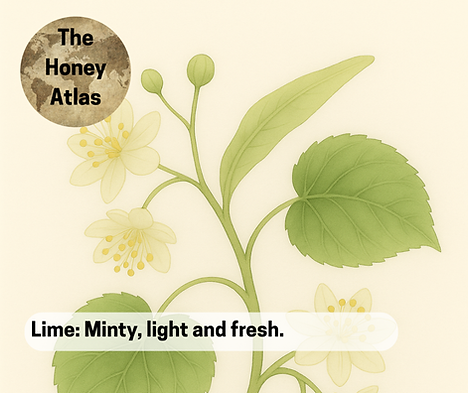
Lime Honey
Lime trees, found throughout the UK and across Europe, burst into bloom in early summer, filling the air with their delicate, citrus-scented flowers. For beekeepers, lime blossom provides one of the most aromatic and generous nectar flows of the season, attracting bees with its sweet, fragrant abundance. The honey produced from lime is typically pale to medium amber, with a fresh, minty-citrus aroma and a flavour that balances floral sweetness with subtle herbal and menthol notes. It crystallises at a moderate pace, often forming a smooth, fine-grained texture. Highly regarded for its distinctive brightness and refreshing character, lime honey is a seasonal favourite appreciated by both beekeepers and honey enthusiasts for its lively, uplifting profile.
Leatherwood Honey
Leatherwood, native to the temperate rainforests of Tasmania, produces a spectacular flush of creamy blossoms each summer, offering one of the most distinctive nectar sources in the beekeeping world. For beekeepers, it provides a reliable and abundant flow, though often in remote and challenging terrain. The honey derived from leatherwood is instantly recognisable - golden to amber in colour, with a powerful, heady aroma and a complex flavour that combines floral, spicy, and slightly musky notes. Its intensity and lingering finish make it a bold, character-rich honey cherished by connoisseurs. Renowned for its uniqueness and regional identity, leatherwood honey stands as a flagship Tasmanian varietal and a testament to the island’s wild, unspoiled landscapes.
.png)
.png)
Buckwheat Honey
Buckwheat is cultivated in parts of the UK and Europe as a fast-growing cover crop and a nutritious gluten-free grain. For beekeepers, it is a highly productive late-season nectar source, flowering when many other crops have finished. The honey derived from buckwheat blossom is strikingly different from lighter varietals: deep amber to almost molasses-dark in colour, with a bold, malty aroma and a robust flavour often described as earthy, treacly, or reminiscent of liquorice. Because of its strong nectar flow and short flowering window, buckwheat fields can yield significant honey in a matter of weeks, attracting beekeepers who value both its uniqueness and its role in supporting colonies toward the end of the season.
Ling Heather Honey
Ling heather, a native plant of the UK’s moorlands and heathlands, blooms from late summer into early autumn, providing one of the last major nectar flows of the season. For beekeepers, it represents a prized but challenging crop, as hives are often moved to the moors to take advantage of its brief flowering period. The honey produced from ling heather is unique—dark amber in colour, with a rich, aromatic scent and a complex, full-bodied flavour often described as woody, floral, and slightly bitter. Its distinctive jelly-like consistency, known as thixotropy, sets it apart from other honeys and requires special extraction methods. Highly valued for its depth and character, ling heather honey is often considered the crown jewel of British monofloral honeys.


Oil Seed Rape Honey
Oilseed rape is one of the UK’s most widely grown arable crops, cultivated primarily for its high-yielding edible and industrial oils. For beekeepers, it provides one of the earliest and most prolific nectar flows of the season, flowering in spring when colonies are rapidly expanding. The honey produced from oilseed rape is pale to almost white in colour, with a mild, clean flavour and a fine, smooth texture. Notably, it granulates very quickly after extraction due to its high glucose content, which makes timely harvesting essential. Because of its sheer abundance of nectar and early-season value, oilseed rape fields are a key destination for many UK bee farmers, helping to build strong colonies and early honey crops.
Phacelia Honey
Phacelia is increasingly grown in the UK as a fast-establishing cover crop, valued for improving soil structure and providing excellent forage for pollinators. Flowering through late spring and summer, its dense stands of purple blossoms offer an abundant and reliable nectar source that bees find irresistible. The honey produced from phacelia is typically light in colour, with a delicate floral aroma and a clean, pleasantly sweet flavour that has subtle herbal and slightly fruity notes. It tends to crystallise slowly, maintaining a smooth, easy-to-spread texture. Thanks to its generous nectar flow and strong appeal to bees, phacelia has become a favourite among beekeepers looking to support colony strength while producing a refined, crowd-pleasing honey.
.png)
.png)
Himalayan Balsam Honey
Himalayan balsam, though an invasive plant in the UK, produces abundant nectar during late summer, flowering along rivers, wetlands, and woodland edges when many other sources are in decline. For beekeepers, it offers a reliable and generous nectar flow at a critical point in the season. The honey produced from Himalayan balsam is typically light to medium amber in colour, with a delicate floral aroma and a mild, pleasantly sweet flavour that can show subtle notes of vanilla or pear. It has a smooth, flowing texture and crystallises slowly, remaining clear for extended periods. While its ecological impact is complex, Himalayan balsam honey is valued for its gentle character and its role in supporting bees toward the end of the foraging year.
Ivy Honey
Ivy, one of the latest flowering plants in the UK, blooms from early autumn into October, offering bees a crucial nectar and pollen source just as most other forage disappears. For beekeepers, it plays an essential role in helping colonies build winter stores and strengthen ahead of colder weather. The honey produced from ivy is distinctive, mid brown in colour, with a strong, resinous aroma and a bold, herbal flavour often described as medicinal, minty, or reminiscent of eucalyptus. It crystallises very quickly, forming a firm, fine-grained texture that is characteristic of this late-season crop. Though its powerful taste divides opinion, ivy honey has a unique profile and is very valuable for the support it provides to bees at the close of the season.
.png)